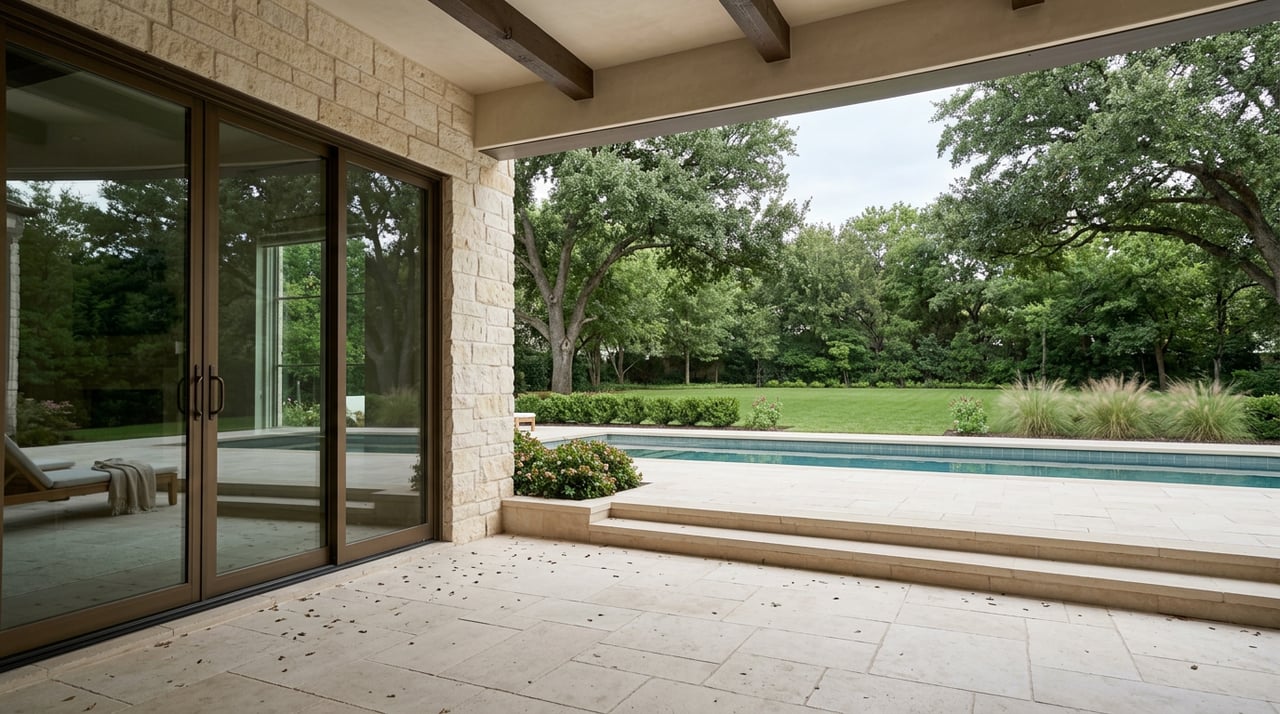
New Construction Or Established Estate Living In Colleyville?
March 24, 2026
March 24, 2026
Trying to decide between a sleek new build or a tree-lined estate with room to breathe in Colleyville? You are not alone. Many buyers weigh low-maintenance living and modern features against the privacy and presence of a larger lot. In this guide, you will learn how each option performs on style, space, HOAs, warranties, upkeep, financing, taxes, and long-term value so you can move forward with clarity. Let’s dive in.
Colleyville is an affluent Tarrant County suburb with a population in the mid-20,000s and strong demand drivers like parks, greenbelts, and convenient access to retail and major employment corridors. The city’s population and income profile reflect a high-achieving suburban market that attracts move-up buyers and downsizers alike, according to U.S. Census QuickFacts.
Schools matter to many buyers. Grapevine-Colleyville ISD recently received a B accountability rating under the Texas A–F system, per Community Impact’s coverage of TEA results. Always review campus-level data for a full picture.
Property taxes are a key budget item. The City of Colleyville lists a municipal rate of $0.260991 per $100 of valuation and publishes overlapping county and school district rates on its quick-facts page. The city also notes a new residential homestead exemption in the latest budget cycle. You can see current details on the City of Colleyville quick-facts page.
You will typically find open layouts, energy-efficient systems, and coordinated high-end finish packages. Large regional and custom builders in DFW promote smart-home features, efficient mechanicals, and curated design selections as standard offerings. For a feel of what major Texas builders highlight, browse the feature sets promoted by Perry Homes.
Most new master-planned or gated enclaves include a mandatory HOA. Expect amenities like gated entries, community pools, trails, and maintained common areas. HOAs often enforce exterior standards through an architectural review board and may cover front-yard maintenance in select phases. Many buyers who want lock-and-leave convenience prefer this structure.
Short-term maintenance is usually lower. Builders commonly provide written warranty programs in a 1-2-10 format that covers workmanship for 1 year, systems for 2 years, and the structure for 10 years. In Texas, some builders may offer a qualifying 1-2-6 format, which changes statutory timelines. Ask for the exact warranty terms in writing and how claims are administered. For an overview of how builder warranties work, review the 2-10 Home Buyers Warranty builder FAQs.
Builders often offer incentives like rate buy-downs or closing cost allowances that can reduce your monthly payment. Recent reporting shows large builders using mortgage incentives more frequently as markets shift. Learn what is being offered and how it is delivered, then confirm how it may affect appraisal and net price. For context on current incentive trends, see AOL’s report on super-low builder mortgage offers.
Established Colleyville estates bring variety and craft. You will see European, Mediterranean, French, Spanish, traditional brick, and Texas-modern influences, with custom millwork and site-specific design. Ceiling heights, stone, and mature landscape elements often add presence. Many of these homes sit within respected enclaves that have grown over decades.
If you want space, this is where Colleyville shines. Larger lots, including acreage inside city limits, remain limited and therefore desirable. Recent small-lot releases and custom-lot phases, such as The Bluffs, Holt Farms, and Oak Alley Estates, illustrate how scarce estate-sized parcels are and why they are positioned as exclusive. You can review examples of these limited estate-lot communities on Calais Custom Homes’ communities page.
HOA structures vary. Some established neighborhoods have modest fees focused on common-area upkeep and design standards. Others are lightly governed or private with minimal shared amenities. Always review the covenants, architectural guidelines, and fee coverage before you write an offer.
Large lots and mature systems require a proactive budget. A common guideline is to set aside about 1 percent to 3 percent of the home’s value annually for maintenance and capital improvements, with higher percentages more likely for older or more complex properties. For perspective on annual upkeep planning, see this summary of typical home maintenance costs. Landscape and irrigation on acreage can add thousands to install and a few hundred dollars per year to maintain, so plan accordingly.
Resale estates usually follow conventional underwriting with valuations supported by neighborhood comps. On unique custom properties, appraisals may draw from per-acre data and comparable estates in nearby enclaves. Fewer comps can introduce valuation swings, so expect a careful comp analysis.
Across both property types, the same fundamentals matter most: location, lot scarcity, build quality, and neighborhood reputation. Proximity to schools, commute routes, and amenities can drive demand and support value over time, as outlined in this overview of how location influences home value.
Where established estates can outperform:
Where new construction can preserve value:
Below are simple, illustrative figures to help you compare. City property tax uses Colleyville’s published municipal rate of $0.260991 per $100 valuation and reflects the city portion only. Total tax bills also include county and school district rates that the city publishes on its quick-facts page. Maintenance reserve follows the widely cited 1 percent to 3 percent rule of thumb, with context from SuperMoney’s maintenance overview.
| Price point | Estimated city property tax (annual) | Maintenance reserve 1% to 3% (annual) | Typical HOA ranges |
|---|---|---|---|
| $900,000 | About $2,349 | $9,000 to $27,000 | Amenity communities often about $100 to $300 per month; some gated estates show annual dues in the low thousands |
| $1,500,000 | About $3,915 | $15,000 to $45,000 | Same ranges apply, adjusted by services and lot size |
| $3,000,000 | About $7,830 | $30,000 to $90,000 | Same ranges apply, with estate HOA structures varying by neighborhood |
Choose new construction if you want:
Choose an established estate if you want:
When you are ready to compare specific neighborhoods, lot positions, and comp sets, schedule a private consult. The Rosie Smelcer Group will help you weigh lifestyle fit and long-term value so your decision is both confident and calm.
The Rosie Smelcer Group is committed to assisting you in the successful purchase or sale of luxury residential properties, land, and investment opportunities in and around the Southlake, Westlake, and Colleyville areas. Reach out to The Rosie Smelcer Group today with your real estate questions and needs.

Rosie Smelcer Group
550 Reserve St Ste 650 Southlake TX 76092