What Daily Life Looks Like in Trophy Club Golf Communities
May 14, 2026
May 14, 2026
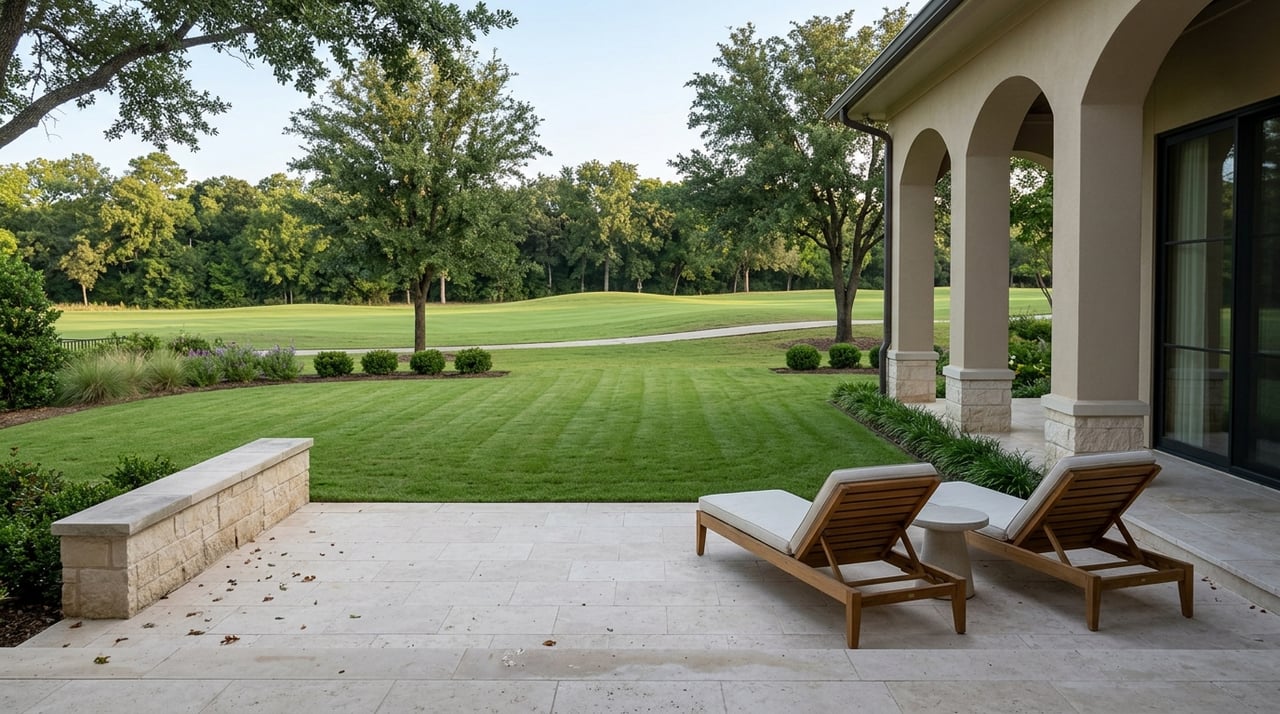
If you picture golf-course living as something reserved for tee times and weekends, Trophy Club may surprise you. Daily life here blends fairway views, neighborhood trails, club amenities, and easy local errands in a town that was designed around open space from the start. If you are wondering what it really feels like to live in one of Trophy Club’s golf course communities, this guide will walk you through the rhythm of everyday life. Let’s dive in.
Trophy Club is a compact North Texas town with a distinct setting and identity. The town covers about 4.2 square miles, yet it includes more than 1,000 acres of parks and open space along with 36 holes of golf woven through neighborhoods and wooded areas.
That layout shapes how the town feels day to day. Instead of a typical suburban grid, you get a creek-and-lake backdrop, with Grapevine Lake along the northeast side of town and Marshall Creek Branch running through residential areas and the golf course.
Trophy Club also has deep roots as a golf-centered community. The town describes itself as Texas’s first master-planned community, with early development tied to a golf-focused vision and the history of Ben Hogan’s original course concept.
In Trophy Club, golf is not just an occasional activity. It is part of the visual and social fabric of the community, shaping streetscapes, views, and routines even for residents who do not play regularly.
Trophy Club Country Club is the main lifestyle anchor. The club includes the Hogan Course, designed by Ben Hogan, and the Whitworth Course, named for Kathy Whitworth, which reinforces how closely the town’s identity is tied to the game.
For golfers, the setup supports more than weekend rounds. Practice areas, a putting green, a chipping and wedge area, a hitting deck, and an indoor simulator make it easier to turn golf into a consistent routine throughout the year.
One of the biggest misconceptions about golf-course communities is that they only work for avid golfers. In Trophy Club, public information shows a broader lifestyle picture.
The country club also offers six tennis courts, eight pickleball courts, a fitness center, swimming, dining, and social access. Membership options include golf, racquets, and social tiers, which gives residents more than one way to plug into club life.
That matters in daily living. You may find that your routine includes a morning workout, an afternoon pickleball match, dinner with friends, or a pool day, even if you rarely pick up a golf club.
Trophy Club’s golf course communities are not all identical, and that is part of the appeal. Some areas feel more open and integrated into the town’s broader trail and park network, while others offer a more private residential setting.
Hogan’s Glen is the clearest gated golf enclave in the public record. HOA and town materials describe it as a private, gated residential neighborhood connected to Trophy Club’s golf tradition and known for a wooded, serene setting.
If privacy is high on your list, this is the type of environment many buyers picture when they think about gated golf-course living. The atmosphere is quieter and more tucked away, while still tied to the larger Trophy Club lifestyle.
Trophy Club Estates is presented in current community materials as a custom-home community rather than a standard tract subdivision. It is also positioned near local parks including Independence Park, Trophy Club Park, and Lakeview Park.
For buyers who want a more custom residential feel, that distinction can matter. It suggests a neighborhood experience shaped more by individual homes and settings than by a one-size-fits-all subdivision pattern.
One of the strongest lifestyle advantages in Trophy Club is how easy it is to spend time outside. This is not an urban-core kind of walkability. It is more trail-oriented and neighborhood-oriented, with sidewalks and pathways that feed into a broader hike-and-bike network.
The town says residents have access to more than 1,000 acres of open and natural trails, including a concrete trail leading into Trophy Club Park. That makes it easier to build outdoor movement into ordinary days, whether that means a morning walk, an evening bike ride, or a weekend outing close to home.
Golf-cart use has also long been part of local life in Trophy Club, though the town notes that carts are not allowed on sidewalks or public trails. Even so, that detail speaks to the community’s long-standing golf-centered character.
Trophy Club’s outdoor lifestyle is not limited to fairways and neighborhood streets. Local parks expand the range of what you can do without leaving town.
Harmony Park includes 13 acres of recreation with two playgrounds, 10 soccer fields, two tennis courts, six pickleball courts, bocce, a basketball court, and a 1.8-mile pathway system. That kind of setup supports active afternoons and weekend plans close to home.
Trophy Club Park adds even more variety. Town information lists disc golf, hiking, mountain biking, shoreline fishing, boating, equestrian use, and ATV or motocross areas, giving residents access to a wider outdoor mix than many golf-centered communities offer.
A golf-course setting can sound peaceful, but buyers also want to know whether daily life is practical. In Trophy Club, routine shopping and dining are increasingly local.
The town’s planning materials describe Trophy Club Town Center at SH 114 and Trophy Club Drive as a mixed-use center with national retailers, local shops, destination restaurants, a hotel, urban residential, and townhomes. Trophy Club Plaza is described as a neighborhood center anchored by Tom Thumb, with businesses such as Starbucks, Verizon, Bank of America, and Walgreens.
That means many day-to-day needs can be handled without going far. For broader options, nearby Southlake, Roanoke, and Grapevine add a larger regional mix of shopping, dining, and entertainment.
For many buyers, school logistics are part of what defines everyday life. In Trophy Club, Northwest ISD is the public-school framework most residents will want to review.
The district’s current feeder pattern lists Lakeview Elementary or Beck Elementary, then Medlin Middle, then Byron Nelson High. Because attendance boundaries are address-based and can change, it is important to verify a specific home’s assignment by street address rather than assuming the same path applies across the whole town.
That is especially helpful in a community where neighborhood identity can strongly influence your search. If schools are part of your decision-making, address-level confirmation is the smart next step.
In short, no. Trophy Club clearly has a golf-first identity, but the public record shows a more layered lifestyle.
You have golf, of course, but you also have racquet sports, fitness, swimming, dining, trails, parks, and local shopping nodes. For many residents, golf may be the backdrop rather than the full story.
That broader mix is what makes Trophy Club’s golf course communities appealing to different kinds of buyers. Some want direct access to the course and club. Others simply want open views, mature surroundings, outdoor options, and a neighborhood pattern that feels more scenic than standard suburbia.
If you are considering a move to Trophy Club, it helps to think beyond the label of “golf-course community.” The better question is how you want your days to feel.
You may prefer a gated setting like Hogan’s Glen, a custom-home feel like Trophy Club Estates, or simply a home that gives you easier access to trails, parks, and the club environment. The right fit depends on how much privacy, activity, and convenience you want in your routine.
A local, detail-oriented home search matters here. In a compact town with a strong identity, small differences in location can shape views, access, neighborhood feel, and school assignments.
If you are exploring Trophy Club or comparing North Texas golf-course communities, the Rosie Smelcer Group offers a polished, relationship-first approach to help you evaluate the lifestyle, the setting, and the home itself with clarity.
The Rosie Smelcer Group is committed to assisting you in the successful purchase or sale of luxury residential properties, land, and investment opportunities in and around the Southlake, Westlake, and Colleyville areas. Reach out to The Rosie Smelcer Group today with your real estate questions and needs.

Rosie Smelcer Group
550 Reserve St Ste 650 Southlake TX 76092